Work Packages at a Glance
Work Package Overview
Lead: Ghent University (UGent)
Partners involved: AUAS, Charité, UNIWA, Imengine bv, Parantion bv, FeedbackAID, BioRICS
Overview:
- Coordinates the full METIS partnership across all participating countries and organisations.
- Supports monthly online partner meetings and regular steering committee meetings.
- Tracks progress against project activities, deliverables, timelines, and budgets.
- Manages reporting, documentation, financial monitoring, and administrative requirements.
- Identifies risks, delays, or implementation challenges and supports corrective action.
- Maintains clear internal communication so that all partners remain aligned throughout the three-year project.
Lead: Charité – Universitätsmedizin Berlin
Partners involved: UGent, AUAS, UNIWA, Imengine bv, Parantion bv, FeedbackAID, BioRICS
Overview:
- Develops and tests an Eportfolio-supported job application training programme for final-year midwifery students.
- Begins with a needs analysis to better understand students’ challenges in moving from education into employment.
- Provides practical training on CV writing, application letters, interview preparation, and professional self-presentation.
- Uses the Eportfolio to help students reflect on competencies, identify learning needs, and plan their professional development.
- Introduces continuous professional development activities to encourage lifelong learning before graduation.
- Includes well-being support, including activities linked to stress awareness and self-monitoring.
- Trains mentors to provide useful feedback, career guidance, and support during the transition into employment.
- Explores digital readiness, technology acceptance, and motivation to use Eportfolios.
- Engages final-year students and mentors across Belgium, Germany, and Greece.
Lead: Artevelde University of Applied Sciences (AUAS)
Partners involved: UGent, AUAS, Charité, UNIWA, Imengine bv, Parantion bv, FeedbackAID, BioRICS
Overview:
- Develops and tests an Eportfolio-supported onboarding model for newly qualified midwives.
- Maps current onboarding practices and identifies what support new midwives need during early practice.
- Creates structured onboarding procedures that can be used in healthcare settings.
- Supports newly qualified midwives to track progress, reflect on practice, and plan ongoing professional development.
- Provides online continuous professional development support for early-career midwives.
- Integrates well-being monitoring and reflection into the early career transition process.
- Includes train-the-trainer mentorship activities to strengthen feedback, coaching, and professional guidance.
- Explores digital literacy, feedback preferences, technology acceptance, and continued Eportfolio use.
- Follows newly qualified midwives over time to understand how onboarding and mentorship support their transition into sustainable practice.
Lead: University of West Attica (UNIWA)
Partners involved: UGent, AUAS, Charité, Imengine bv, Parantion bv, FeedbackAID, BioRICS
Overview:
- Supports implementation of the activities and tools developed through WP2 and WP3.
- Ensures that METIS activities are practical, relevant, and suitable for use across different education and healthcare settings.
- Provides quality assurance through regular review of progress, risks, outputs, and partner feedback.
- Checks alignment with European midwifery, education, workforce, digital, and data protection requirements.
- Supports ethical and responsible implementation of Eportfolio-supported activities.
- Shares project updates, resources, and results through the METIS website, professional networks, events, conferences, and publications.
- Develops open-access materials so that other institutions and stakeholders can learn from and adapt the METIS approach.
- Assesses project impact using structured evaluation methods, including participant reactions, learning, behaviour change, and broader organisational effects.
- Explores how METIS tools and lessons could be adapted for other health professions facing similar workforce transition and retention challenges.
Work Package Milestones & Progress
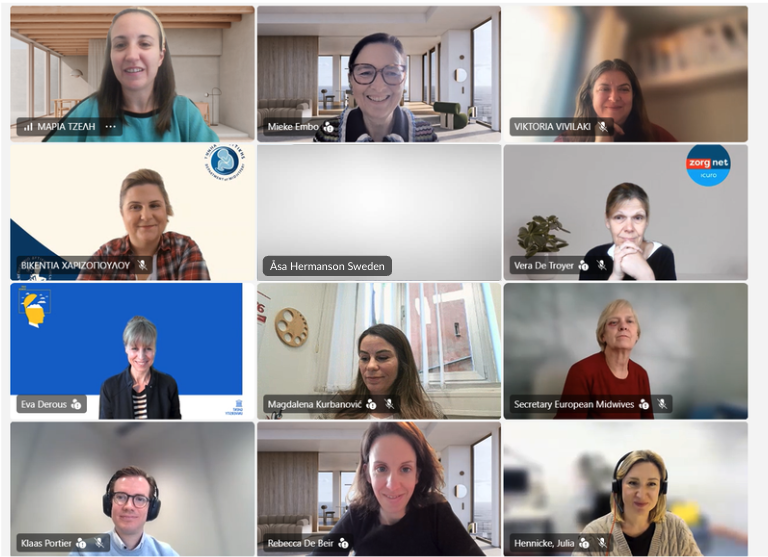
Partners launched the project through online kick-off meetings and the first live consortium meeting in Ghent, setting the workplan and priorities for the years ahead.
Read blog post
Collaboration channels, shared materials, and coordination systems were established to support smooth consortium working.
The METIS website, www.metismidwifery.eu, goes live, and includes information on work packages, partners, blog post updates on project progress and a dedicated LinkedIn group.
Join LinkedIn group
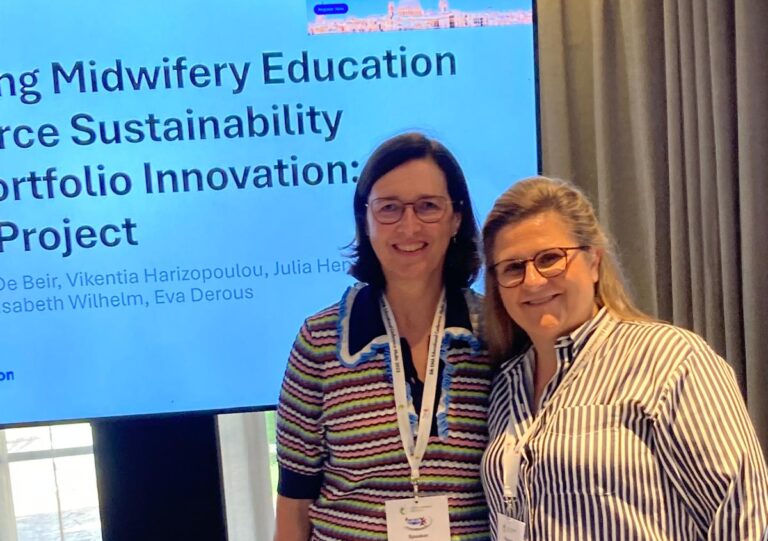
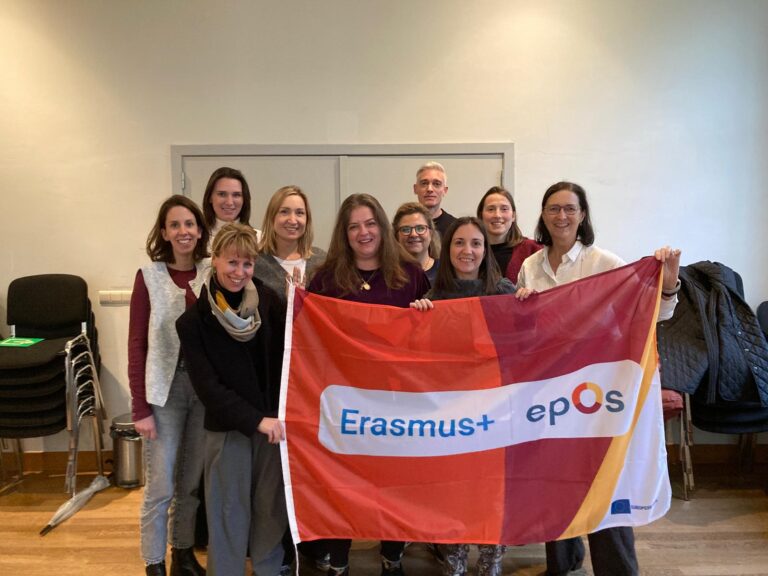
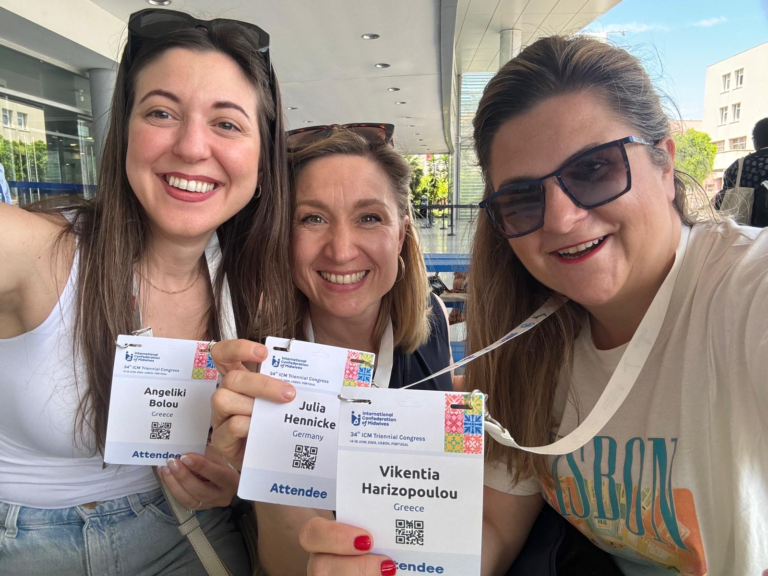
The METIS consortium met for its second in-person project meeting in Athens, Greece hosted by the University of West Attica (UNIWA).
Read blog post
Interviews across partner countries explored what students and early-career midwives need to prepare for job applications.
The team tested the wearable well-being monitoring system and prepared it for use in education and transition-to-practice settings.

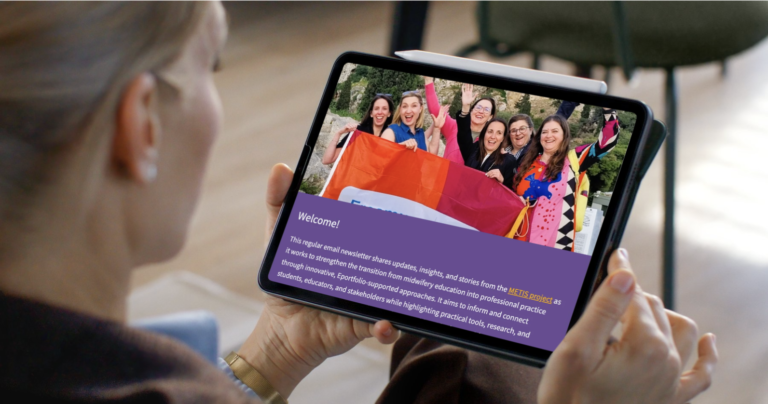
Newsletter emailed out to METIS project partners and stakeholders.
Read and subscribe to newsletter
Procedures and ethics approvals were completed to support the next phase of wearable well-being monitoring.

Partners will develop and test ePortfolio-supported training for CVs, application letters, and interviews.

Partners will develop digital CPD activities that support reflection, self-assessment, and professional growth.
The consortium will review progress, align implementation plans, and coordinate the next phase of work.
METIS will bring together partners, educators, students, professional bodies, and stakeholders around sustainable midwifery careers.
Final outputs, recommendations, and learning will be shared through project events, reporting, and public resources.
Work Package Timeline
Supporting Midwives’ Transition into Sustainable Practice
Across Europe, many midwives leave the profession within their first years of practice. Rapidly evolving roles, stress, poor onboarding, and limited support can make this transition challenging and valuable talent is often lost when it is needed most.
METIS is an Erasmus+ project that tackles this challenge by empowering and supporting midwives as they step into their professional careers. By co-developing tools with universities of Applied Sciences, employers, subject matter experts, and professional associations, METIS provides evidence-based tools that strengthen midwifery and enable sustainable career pathways. From digital preparation for entering a changing workforce to onboarding models, mentorship, and wellbeing monitoring, METIS offers evidence-based solutions that strengthen midwifery and ensure sustainable career pathways.
Updated 2 June 2026.